

"Iran is not sure whether Israel will comply with the peace plan," said Saeed Khatibzadeh, deputy foreign minister of the Islamic Republic of Iran
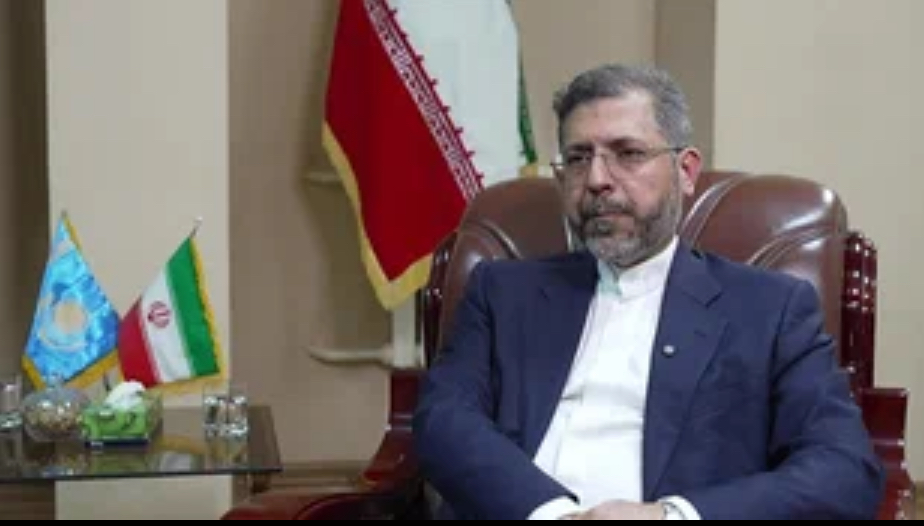
Eurasia: Politics and Culture continues its series of interviews with leading figures in Eurasia. This time, in an exclusive interview for the "Eurasian Players" column, we feature Saeed Khatibzadeh, an Iranian diplomat, former spokesman and head of the Iranian Foreign Ministry's Public Diplomacy Center, former Iranian Ambassador to Croatia, and now Deputy Foreign Minister of the Islamic Republic of Iran since January of this year. We discussed the latest developments in the Middle East and his country.
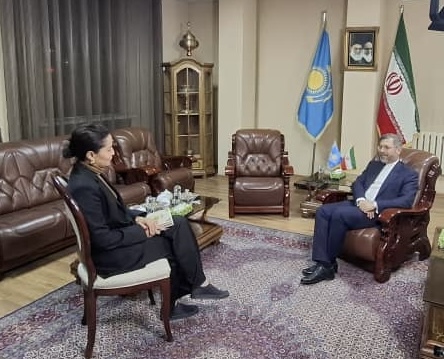
Akmaral Aben: How does Tehran view the Gaza peace agreement? How do you see further developments in the region and Iran's role in them?
Saeed Khatibzadeh: First, thank you for the invitation. You know, what happened in Gaza was a tragedy that deeply shocked everyone, and a tragedy that affected everyone – both within the region and beyond.
We see that people around the world are aware of what happened in Gaza. That is why everyone, including Iran, in one way or another, conditionally or unconditionally, welcomed the attempt to put an end to it.
More than 65,000 innocent people and civilians have been killed by the Israeli regime in Gaza, and more than 2 million people are in dire need of even such basic things as food, water, clean water, and so on.
That's why Tehran welcomed this, because ending it is a priority for everyone. But at the same time, we are unsure whether Israel will comply with the terms of this peace plan. Furthermore, we are unsure whether Netanyahu (Israeli Prime Minister; in 2024, the International Criminal Court in The Hague issued an arrest warrant for him on suspicion of war crimes and crimes against humanity committed in the Gaza Strip – editor's note) will honor his obligations under this agreement.
Regardless, we are currently coordinating with our friends in the region, as well as with the resistance within Palestine, to ensure the implementation and enforcement of the provisions of this peace agreement as soon as possible.
Akmaral Aben: Russia, Azerbaijan, and Iran have agreed to establish a working group to develop an action plan for the development of the North-South international transport corridor by early next year. Please describe the significance of this project and your plans for logistics development.
Saeed Khatibzadeh: Such corridors are in great demand and are crucial for the region's development. Iran has always attached great importance to this and understood their significance. We are extremely pleased that these trilateral efforts will soon be realized and will contribute to the region's development.
We are in close contact with our friends and colleagues in both Baku and Moscow to ensure the timely implementation of our agreements. The region needs this kind of interaction, bi-, tri-, or even multilateral cooperation, to accelerate the transfer of technologies necessary for all countries' further development. And I am sure everyone also understands that this is important not only for economic development, but also, most importantly, for peace and stability.
Akmaral Aben: How do you assess the prospects for Washington's participation in the development of the Zangezur Corridor?
Saeed Khatibzade: We are closely monitoring developments there. We have clearly communicated our position to all parties involved. Tehran strongly supports peace and stability in the region, especially peace between Azerbaijan and Armenia, but we are extremely concerned about the potential interference of any external forces.
We believe that no external force, including the United States, should enter the region for the benefit of the parties involved. Our friends in Yerevan have assured us that the agreements reached are purely economic in nature and do not envisage any third-party presence in the region, and we believe them. However, we continue to closely monitor developments and the details of the ongoing conflict.
Akmaral Aben: How does Iran envision the development of relations with the CSTO?
Saeed Khatibzadeh: According to our Constitution, there are certain conditions and requirements for Iran's accession to any military blocs in the region. Therefore, the Collective Security Treaty Organization is an organization with whose members we have bilateral relations, but at the same time, the issue of collective participation is precisely what we must consider in accordance with our Constitution.
We have very good relations with the members of this alliance—we recently signed a comprehensive cooperation agreement with the member countries of the Collective Security Treaty Organization (CSTO).
Iran values this partnership very highly, and there is a plan to expand our cooperation within the alliance. However, regarding the accession of the Collective Security Treaty Organization (CSTO), we must take into account Iran's Constitution. Therefore, we still need to work in this direction and on this issue.
Mr. Said Khatibzadeh, thank you for the interview.